Movement Is Medicine: More Than Just Muscle
For decades, we’ve told patients and ourselves a simple truth: exercise is medicine.
But what if that statement doesn’t go far enough?
Emerging science is revealing that movement is not just beneficial—it may be one of the most powerful, system-wide healing tools available to the human body.
Beyond Muscles: A Whole-Body Response
When most people think of exercise, they think of burning calories, building muscle, or improving endurance. Those benefits are real—but they are only the surface.
Underneath, something far more profound may be happening.
Recent research suggests that during physical activity, the body may release extracellular mitochondria—tiny “power plants” that can travel through the bloodstream and interact with other cells.
Your muscles may not just be working harder—they may be communicating, sending signals, energy, and even repair mechanisms throughout your body.
A Biological Ripple Effect
This emerging understanding helps explain why exercise has such wide-ranging benefits. Movement doesn’t act on a single organ or pathway—it creates a ripple effect across multiple systems.
Regular physical activity may:
- Improve cellular energy production
- Regulate inflammation
- Strengthen immune response
- Enhance tissue repair and healing
- Optimize metabolism across the body
In other words, exercise isn’t localized—it’s systemic medicine.
Exercise as Intercellular Communication
We are beginning to understand that exercise functions like a sophisticated communication network within the body.
Muscles release signaling molecules (myokines), influence hormonal pathways, and may even distribute mitochondrial components—all contributing to a coordinated, whole-body response.
This means:
- Movement affects your brain as much as your body
- It influences mood, cognition, and resilience
- It supports cardiovascular, metabolic, and immune health simultaneously
No single medication can replicate this level of integrated benefit.
There Is No Pill for This
Modern medicine is incredibly advanced—but there is still no drug that can mimic the full-body effects of exercise.
You can prescribe medications for blood pressure, glucose control, inflammation, or mood—but movement touches all of these at once.
That’s what makes it unique.
And that’s what makes it powerful.
The Future of Medicine Is Already Here
The future of healthcare isn’t just about discovering new treatments—it’s about fully embracing and implementing what we already know works.
Movement is not optional. It is foundational.
The body doesn’t just respond to exercise—it redistributes its benefits, amplifying healing across systems.
A Simple but Powerful Prescription
You don’t need extreme workouts to benefit.
Consistent, intentional movement—walking, strength training, stretching, or even brief activity throughout the day—can initiate these powerful biological effects.
Start where you are:
- A 10-minute walk after meals
- Strength training twice a week
- Taking the stairs
- Standing and moving every hour
Small actions, repeated consistently, create profound change.
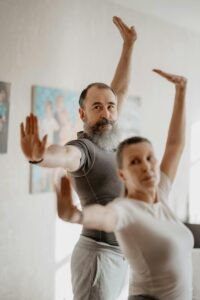
Exercise doesn’t just train muscles.
It may send energy, signals, and healing throughout the body.
Movement is not just something you do.
It’s something your body uses to heal itself.
And that makes it one of the most powerful forms of medicine we have.